
Most church facility leaders do not spend their days improving buildings. Instead, they spend their time preventing small problems from becoming big ones.
They follow up.
They double-check.
They answer the same questions again.
They chase vendors.
They look for paperwork.
They try to remember if that preventive maintenance task was completed.
By the end of the day, they are exhausted—not from strategic leadership, but from friction. They are proverbially “chasing their tails.”
If you are entrusted with stewarding a church campus, this should concern you. Even a 100,000-square-foot facility—a campus likely representing $30–50 million in replacement value when you include the building, infrastructure, parking, HVAC, AVL, IT, and security systems—can be well maintained. Faithfulness requires attention, but it should never require chaos. Stewardship is not about busyness; it is about intentional care.
The Problem with Follow-Up Culture
Neglect is rarely intentional. In many churches, nothing is technically broken or in need of immediate repair. But everything requires follow-up:
- “Did that work order get done?”
- “When was that unit last serviced?”
- “Who has the documentation?”
- “What room is available?”
- “Was that setup completed?”
When every answer relies on memory or repeated follow-up, the system is fragile. Fragile systems increase risk. This is not a people problem; it is a systems problem. When your facility steward becomes the reminder system, strategic leadership disappears.
Follow-up culture creates decision fatigue, reactive maintenance, shortened equipment life, budget surprises, ministry friction, and leadership burnout. You cannot steward a multi-million-dollar asset casually—or reactively.
A System That Works: CMMS as Your Preventive Engine
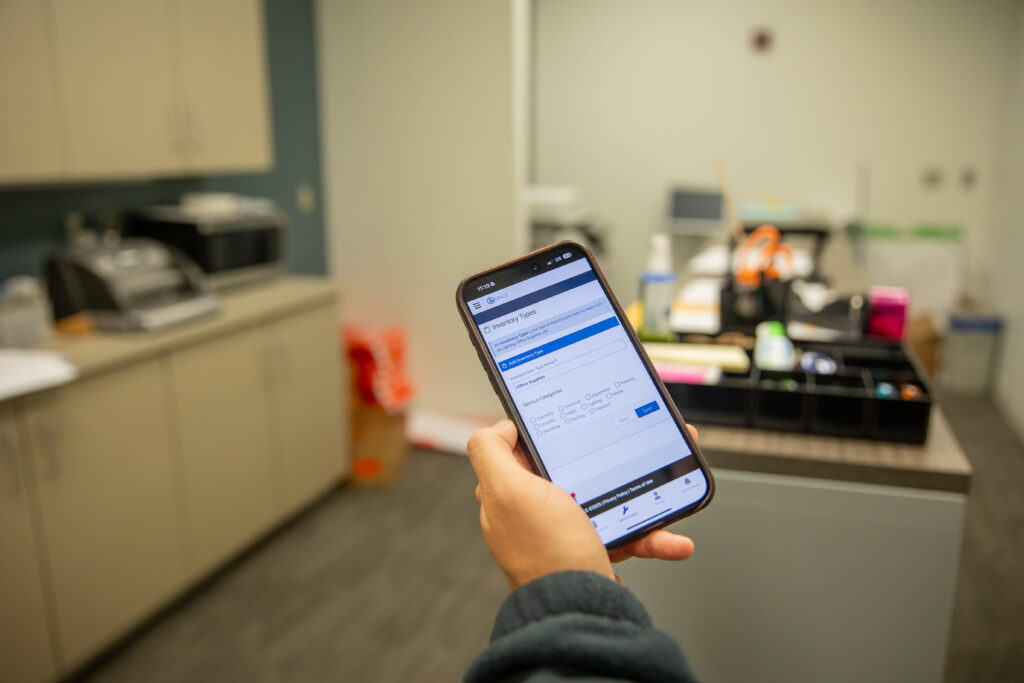
A properly implemented CMMS (Computerized Maintenance Management System) like eSPACE transforms your operations. It becomes your preventive maintenance engine, work order accountability system, asset lifecycle database, vendor compliance tracker, documentation archive, budgeting reference, facility utilization manager, and institutional memory.
Instead of asking, “Did we remember to…?” the system tells you.
Instead of relying on email threads, you rely on documented history.
Instead of chasing tasks, you manage outcomes.
Benefits of a True System of Record
When your CMMS functions as a single source of truth:
- Follow-up decreases
- Visibility increases
- Accountability becomes automatic
- Trend analysis becomes possible
- Capital forecasting is informed
Imagine removing 30+% of reactive follow-up from your team’s week.
With that reclaimed time, you can:
- Extend asset life cycles
- Reduce deferred maintenance
- Improve budgeting accuracy
- Strengthen vendor relationships
- Align facilities with ministry growth
- Train and develop your team
Technology does not replace leadership. It enables it.
“Whoever can be trusted with very little can also be trusted with much.” — Luke 16:10
Fewer follow-ups mean better operations. Better operations create margin. Margin allows stewardship. And stewardship honors the One who entrusted it to us.
Self-Assessment: Are You Operating from Memory or a System?
Rate each statement from 1–5:
1 = Rarely True | 3 = Sometimes True | 5 = Consistently True
Preventive Maintenance & Asset Management
- We have a documented preventive maintenance schedule for all major systems.
- PM tasks are automatically generated and tracked.
- We can see maintenance history for any asset in under 60 seconds.
- We know the age and projected replacement cycle of our critical equipment.
- We can quantify deferred maintenance.
Work Orders & Accountability
- All work requests are submitted through a centralized system.
- We can measure response and completion times.
- No task depends on someone remembering.
- We can see workload distribution across the team.
- We can report recurring issues and trends.
Vendor & Compliance Tracking
- All vendor documentation is centrally stored.
- We know contract renewal timelines.
- We track vendor performance.
- We can pull documentation instantly during an audit.
- Compliance does not depend on email folders.
Budgeting & Capital Planning
- We can forecast capital expenses 3–5 years out.
- Budget decisions are informed by historical maintenance data.
- We track cost-per-asset or cost-per-space.
- We can justify capital requests with documented evidence.
- We are not surprised by predictable failures.
Operational Clarity
- Our team spends minimal time following up on tasks.
- Leadership can access facility data without interrupting the team.
- We answer most facility questions with data, not memory.
- Our system functions as institutional memory.
- We are more proactive than reactive.
Scoring:
- 100–125 → Operating as a Steward with a System
- 75–99 → Structure exists, but friction remains
- 50–74 → Likely operating as a reminder system
- Below 50 → Managing, not stewarding
The Takeaway
If your operation relies heavily on memory, spreadsheets, or verbal follow-up, you are increasing the risk to a multi-million-dollar asset.
Good operations give managers their time back.
Great stewardship uses that time wisely.