

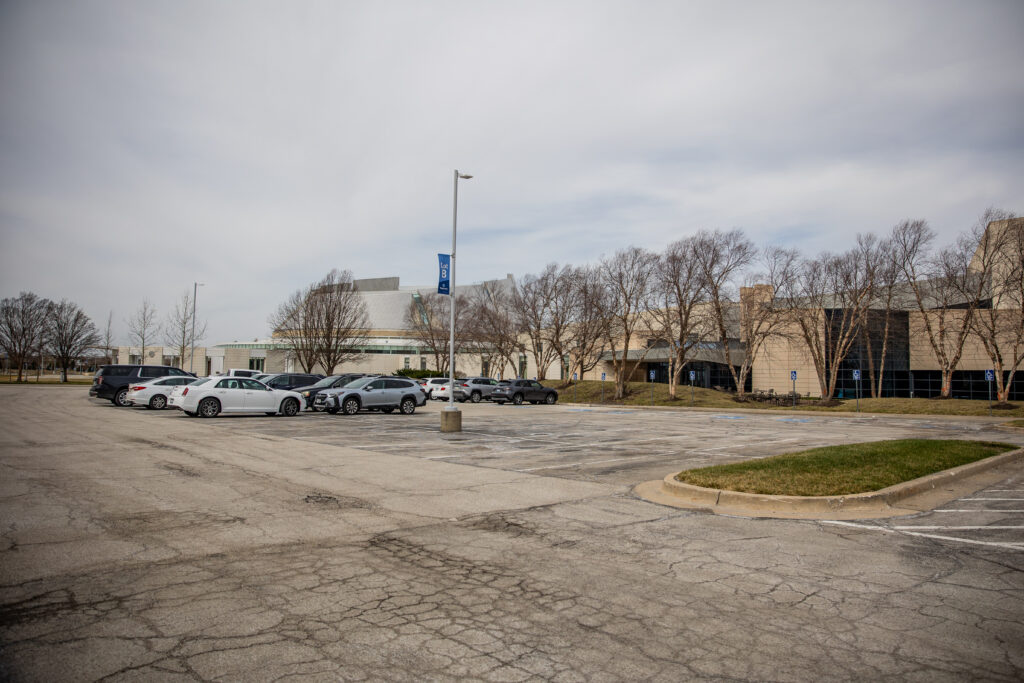
Your parking lot is part of what we call the big three. These are the assets at your facility that cost the most money and tend to last the longest, but if they fail or give you trouble, they can disrupt your ability to gather.
If your church has a large parking lot, especially one located next to or adjacent to other properties, there is a good chance someone will eventually ask whether you are willing to share it. When that question comes, there are some reasonable things to think through, get written down, and cover under a contract before you let an outside or neighboring organization use your lot.
None of this is meant to make you say no. Sharing a parking lot can be a genuine blessing to your neighbors and a real source of capital for your ministry when it is done well. It just needs to be done with your eyes open. Here is what to work through first.
Sharing a parking lot can be a genuine blessing to your neighbors and a real source of capital for your ministry when it is done well.
Start With Liability, Because the Risk Transfers to Your Congregation
First and foremost, understand that there is liability. If it is your parking lot, even when someone else is using it, you can become liable for problems that occur there depending on how you write the contract or whether you write one at all. Because you are private property, that can include damage to a vehicle, someone getting injured, and similar issues.
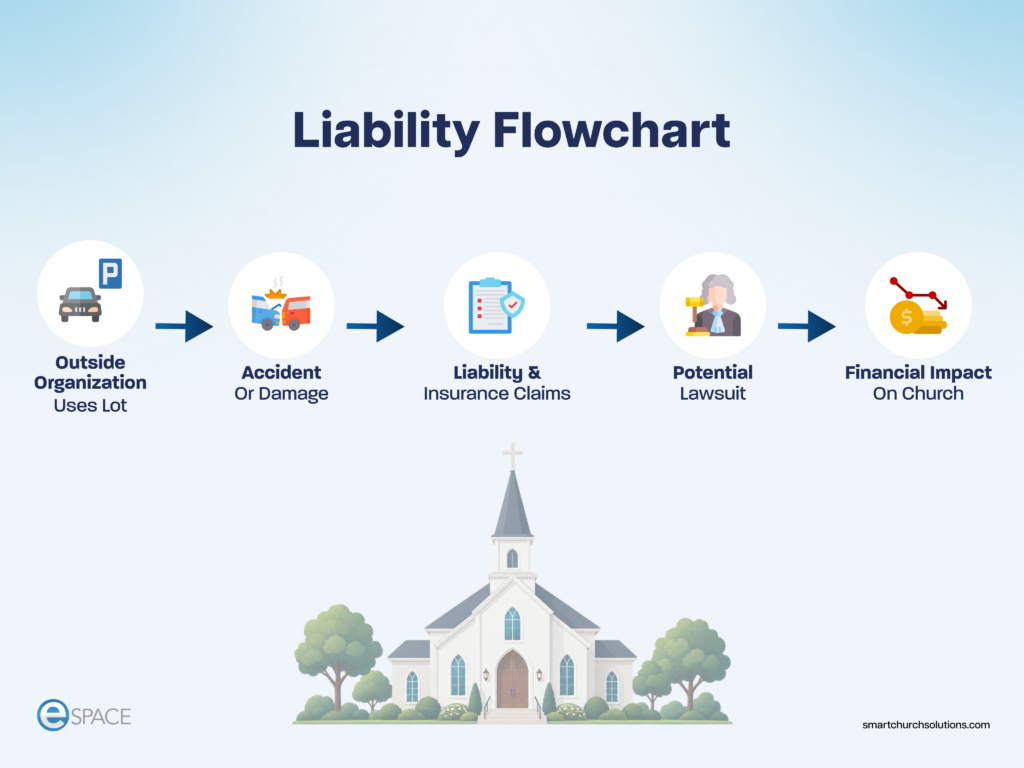
Increased traffic brings its own concerns. So does the potential for conflict, or even violence, if you are sharing the lot with something like a counseling center next door where there is a possibility for an issue. And if people are using the lot late, when the sun is down and the area is not well lit, any lighting that is not working can increase your potential liability.
There is more to it, but here is the point: it is not un-Christian, or the wrong thing to do from a religious standpoint, to consult a lawyer first and identify where you are exposed. That risk actually transfers onto your entire congregation in one way or another. If you get sued, everything that comes with being exposed in a lawsuit follows, and it does not matter whether the suit is frivolous or not. You do not want your church’s name associated with lawsuits. And if there is any monetary or compensatory aspect that you are liable for, that comes out of the church operating budget and your insurance, which carries long-term impacts.
Put It in Writing: What a Good Sharing Agreement Covers
You are also going to have increased usage during times when you may not have anything scheduled right now, but may later. Once you have worked out a deal, you cannot simply take it away because you decided to hold a big daytime meeting during the hours that lot is normally available to whoever you are sharing it with. So there are ownership questions that need to be codified in the contract: who can do what, and what kind of prior notice is required before any changes.
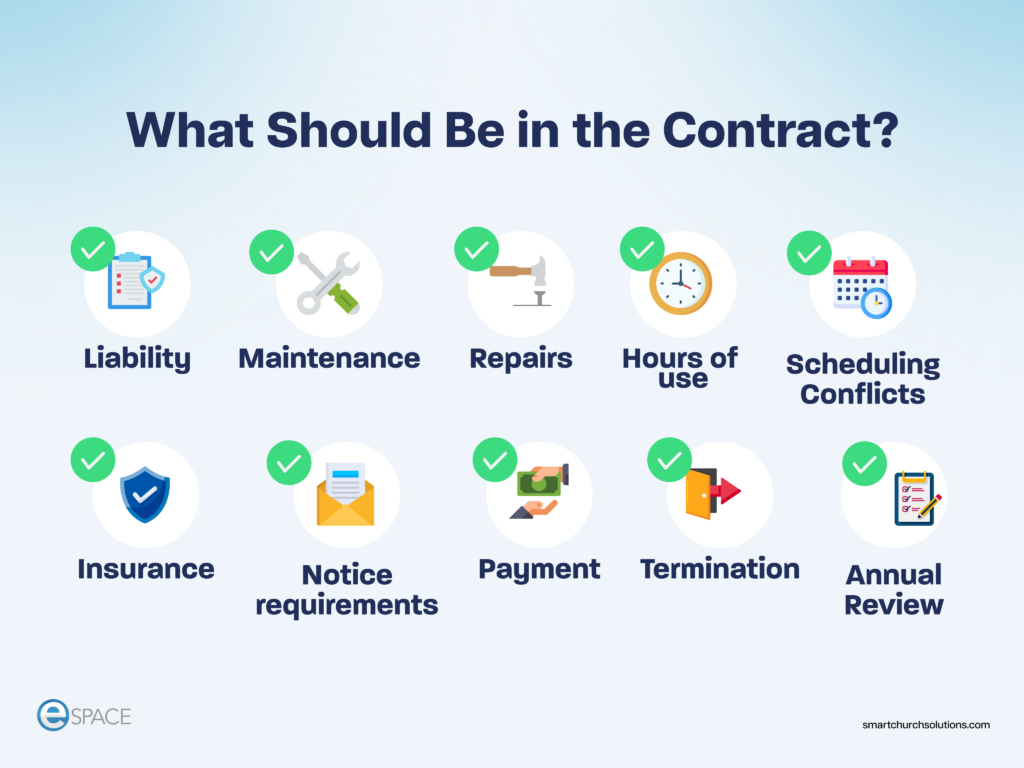
Then there is potential damage. If the organization sharing your lot takes a delivery and the delivery truck damages part of your pavement, who is responsible? Who takes care of it? Spell that out ahead of time.
And do not forget ongoing maintenance. More traffic means more wear and tear, which can mean a higher frequency of sealing, recoating, and similar upkeep. Someone has to plan and pay for that.
Know Who Is Parking There, and What They Legally Require
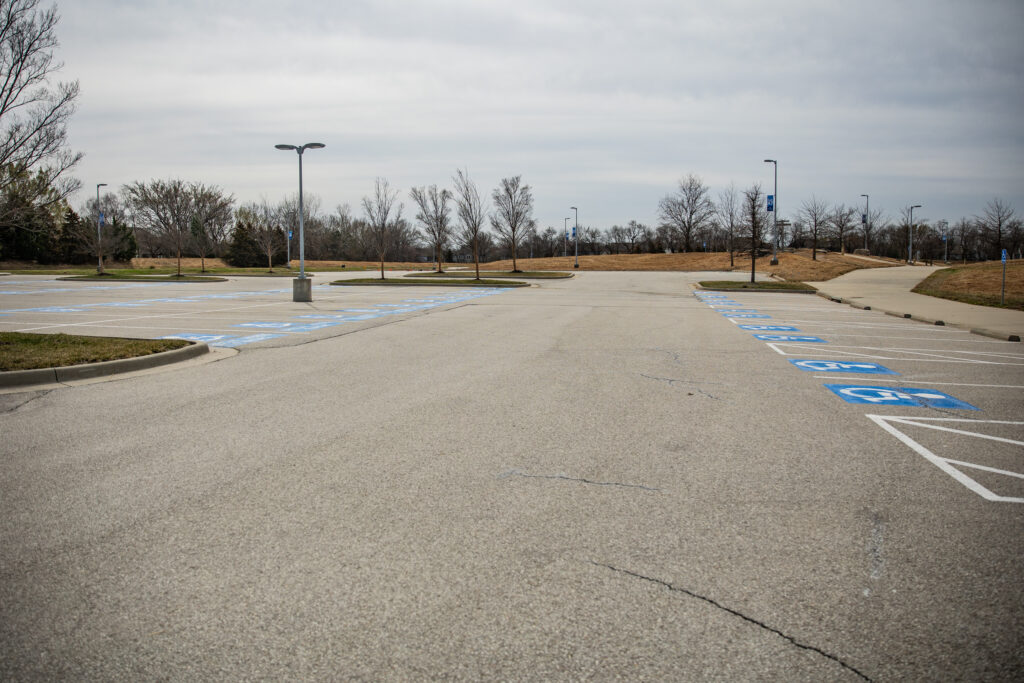
These are very general and high-level points, but one thing to consider is what type of business is sharing your parking lot. If the lot is primary for them and they are not an exempt business, which most are not, they may have particular requirements that you need to invest money into so they stay in compliance.
For example, that could mean having the right number of accessible spaces, including van-accessible spaces, located next to where their people would park for the quickest entrance to their building or area. It might also mean additional signage. This assumes a business collocated next to you, but you may need to handle some of those things yourself.
The Park-and-Ride Problem
One thing I see a lot that makes me nervous is allowing people to park and ride in your lot, where they drop a vehicle off and then carpool. We see this often in the metroplex and other large, congested areas. A lot of churches open up their lots to allow it, and then have no plan for the liability that comes with cars getting broken into, items left overnight, or vehicles that break down. There simply is no policy.
Sometimes it gets more complicated. We have worked with organizations where everyone knows they can park Monday through Friday but must be gone Saturday and Sunday. Well, if you allow an 18-wheeler to park in the lot and it breaks down, it could impact your Sunday operations. And if you have to tow it, now you are dealing with that headache too.
Do Not Forget the Weather
For climates where the weather varies and is not the same all year long, sharing a lot raises another layer of liability. Who is plowing the snow? Who is putting down the ice melt? The church still bears the liability for injuries if those things are not taken care of, and they are still a cost to you to make happen.
So if a parking lot share is truly just “hey, go ahead, use our lot,” it is a financial liability to the congregation.
When Your Church Is the One Borrowing a Lot
On the other side of that coin, there are churches that use neighboring parking lots on the weekend, belonging to businesses that are not open on weekends. There should certainly be agreements there as well, because you are putting risk onto them too. Consult a lawyer and say, essentially, let’s all be on the same page here.
A church I worked at had a large parking lot that we used fully, because we had a large school with around 600 families dropping kids off every day. We could not just say, let’s rent out our parking lot. But we were near manufacturing facilities that constantly asked whether they could rent a chunk of our lot for their employees and bus them to work.
Amazon also asked about placing an Amazon locker on site. We ultimately rejected these, because an Amazon locker invites people to your facility whom you may not want there, including people who might want to break into the locker. You end up inviting something that could create a whole new risk for your organization.
The Tax-Exempt Trap Most Churches Miss
Here is one that often gets overlooked. If you have an outside organization that is not a 501(c)(3), and you are going to take funds from them, that money can be great because it helps maintain a lot that is now more susceptible to damage and wear. But it can also change your tax-exempt status. That does not necessarily mean you lose it, but you may lose it on a portion of your property. And once that cat is out of the bag, even if you dissolve the agreement, getting it back could be far more difficult, and there is a financial cost to that.
So ask yourself: are you charging enough rent to cover you not only for wear and tear, maintenance, and refurbishment, but also for the amount you are going to pay in taxes for the use of property that is no longer specifically for a tax-exempt purpose? These are all things you want your accounting people and your lawyers involved in from the very beginning, because they represent risk that the average person does not think about.
“We Just Want to Be Neighborly” Still Belongs in Writing
We tend to think, hey, we just want to be neighborly. But say you have a construction project going on next door and you allow their equipment to park in your lot for a couple of months. You could do that as a neighborly agreement, but you probably want it in writing, spelling out what happens when that rental equipment destroys your parking lot.
Having a formal agreement that says here is how we are going to share the ongoing maintenance costs makes all the difference. It is just like a retention pond that has to be shared among different properties: who is going to maintain it, and who is going to strip out the unwanted vegetation? You need an agreement you can follow up on later, and it has to run with the property owner, not just the businesses located there. A lot of that will require help from outside legal and financial firms, so do not be afraid of bringing them in.
There Is Nothing Wrong With Charging Market Value
Too often, churches are afraid of renting out their property. They feel like they have to do it at a discount, or for free. But you are providing utilities. You are providing space. You are absorbing wear and tear, and you are paying for all of those things. There is nothing wrong with renting your property and receiving market value if you can.
It is just like having a cellular tower placed on your property and hidden in your steeple. Done correctly, and with the right help, those arrangements can generate capital for the replacement and maintenance of your building. Parking is no different.

Formalize It, and Revisit It Every Year
We have seen how these things drift. At one facility I assessed, there was a nice handshake agreement for utility companies to park their trucks and let their staff leave vehicles, even on Sunday, so they could pick up their big work trucks. Then it grew to additional vehicles, and then to materials stored behind the trucks. And now you are back to the same questions: maintenance, who is taking care of this, and how do you enforce an agreement when it is not written down anywhere?
That organization ended up formalizing it, and they were fine with everything, but the real issue is the long term. The people who make the deal may not be there long term. That is why, when you make these deals, you put the information into the platform, into eSPACE, into your document library. Then you set a planned, preventive-maintenance-style reminder to recur every year to revisit the agreement and make sure it is still being enforced. Build a mechanism into the contract that says you will reassess and confirm you are still in agreement every year, and re-up it annually.
The key is to go in with clear eyes: understand the liability, get the right people involved early, put the agreement in writing, charge fairly, and revisit it every year
The Bottom Line on Church Parking Lot Sharing
Sharing your parking lot is not the wrong thing to do. In many cases it is neighborly, and it can even fund the very maintenance that keeps that lot healthy. The key is to go in with clear eyes: understand the liability, get the right people involved early, put the agreement in writing, charge fairly, and revisit it every year. Do that, and a shared parking lot becomes an act of good stewardship rather than a quiet financial liability sitting out under the streetlights.
If you would like a single place to store these agreements, tie them to a recurring annual review, and keep the whole lifecycle of your facility organized, that is exactly what eSPACE is built to do. We would be glad to show you how it works for your church.