

Wait, I thought church event management and church facility management were the same thing. Are they not?
Churches often use the terms event management and facility management interchangeably. While the two are closely connected, they are not the same thing, and confusing them can create major operational challenges.
Think about how we use brand names in everyday conversation. People say they are going to “Google” something even if they use another search engine. Years ago, I used to ask my team to “make a Xerox,” even though we actually had a Minolta copier. The terms became generic substitutes for a broader activity.
The same thing has happened in many churches with event management and facility management. Scheduling rooms, coordinating events, processing work orders, maintaining HVAC systems, managing preventive maintenance, setting up spaces, and overseeing building operations are all related tasks, but they are not identical responsibilities.
That distinction matters more today than ever before. Churches are managing increasingly busy campuses with worship services, schools, ministries, outside groups, community events, and volunteers all sharing the same facilities. Without a clear understanding of the difference between event management and facility management, communication gaps, maintenance issues, scheduling conflicts, and operational inefficiencies become much more likely.
So, what is the difference between event management and facility management, and why should churches care?
The Disconnect
Over the years, we have noticed a major disconnect within the church software world and even within church administration itself. In many churches, the term “facility management” has become interchangeable with “event management.” While the two certainly overlap, they are not the same thing.
This confusion seems to be especially common in the church market. Many church management systems label room scheduling and calendar coordination as “facility management,” when in reality those functions represent only a small portion of what true facility management involves.
Managing the use of a building is important, but facility management goes far beyond scheduling events or reserving rooms. True facility management includes maintenance, preventive maintenance, asset management, capital planning, building systems oversight, safety compliance, and long-term stewardship of the physical campus.
In most other industries, facility management refers to the complete operational care of a building and its assets, not simply how spaces are scheduled or used. Churches that reduce facility management to event scheduling often create operational gaps that lead to deferred maintenance, communication breakdowns, and increased long-term costs.
Event management supports ministry activity. Facility management supports the health, functionality, and longevity of the entire campus. Churches need both, but they should not be confused as having the same responsibility.
Church Event Management vs. Church Facility Management
Let me break this down for you further with a list of terms to help with the critical differentiation:

EVENT MANAGEMENT (Also referred to as “event scheduling”, “resource scheduling”, and “facility scheduling”):
- Systematic planning for the use and utilization of the spaces within the facility
- Scheduling conflict avoidance
- Planning of the use of needed resources for said uses such as tables, chairs, etc.
- Addressing the setup and potential cleaning associated with said events
- Potential rental and outside group usage scheduling
FACILITY MANAGEMENT (Also referred to as “Computerized Maintenance Management System” or “CMMS”):
- Addressing Corrective Maintenance issues (Break/Fix)
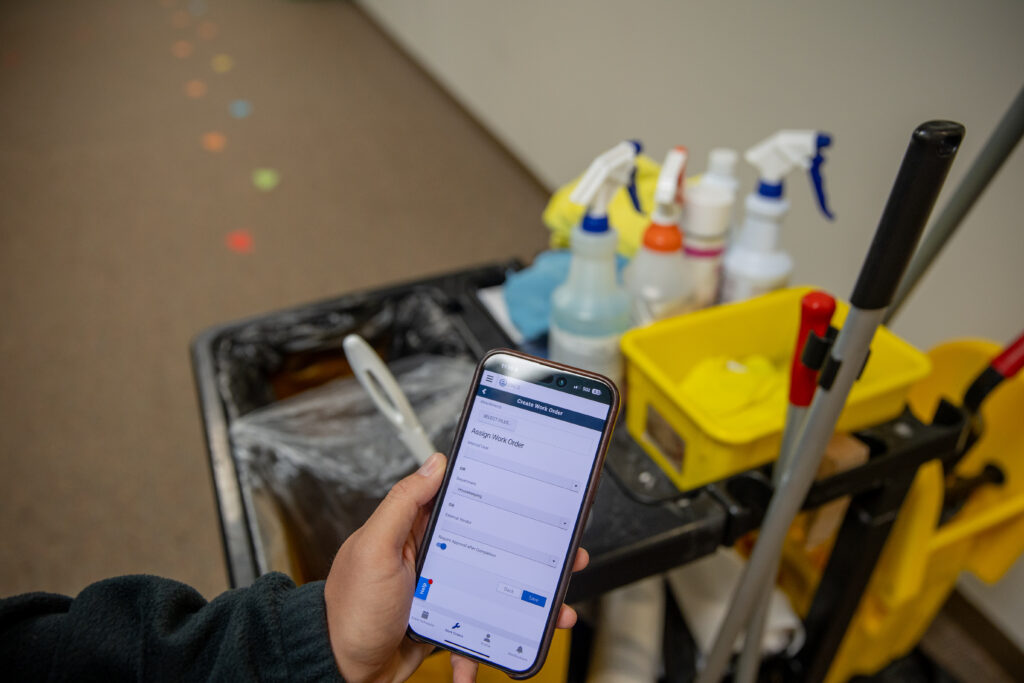
- Work Order Management
- Planning for and implementing Preventive Maintenance measures
- Vendor Management
- Asset and Equipment Management
- Life Cycle Planning for Capital Renewals
- Inventory Management (Consumable and Repair)
Do you see the difference?
One focuses on managing the use of the facility—scheduling rooms, coordinating events, and organizing activities. The other focuses on managing the physical facility itself—maintaining building systems, overseeing repairs, planning preventive maintenance, and stewarding the long-term health of the campus.
Both are important, but they serve very different purposes.
Facility Management is Critical
So, which is more important: event management or facility management?
The reality is that churches need both. However, facility management is foundational.
Why? Because if the facility itself is not safe, functional, clean, and properly maintained, the ability to schedule and host events becomes far less important. A calendar may look full, but if HVAC systems fail, classrooms become unusable, roofs leak, or deferred maintenance piles up, the ministry is eventually impacted.
Unfortunately, we are seeing this more and more in churches across the country.
As we perform Facility Condition Assessments, we regularly encounter churches with spaces that are no longer safe, clean, or functional for congregations, schools, ministries, or outside groups. Years of deferred maintenance and inconsistent stewardship of the facility have gradually reduced the building’s usefulness and reliability.
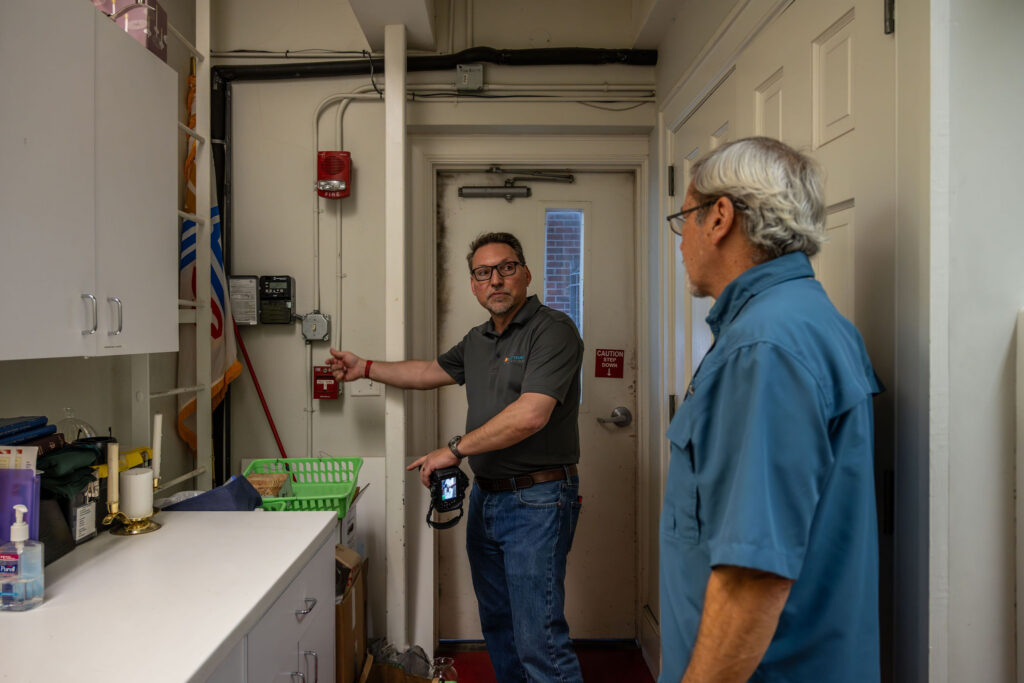
That is why churches must understand the difference between managing the use of a facility and managing the facility itself.
If your Church Management Software (ChMS) only provides event scheduling and room reservation tools—regardless of what the software calls it—you are addressing only a small portion of what true church facility management requires.
Real facility management, or what we often call Facility Stewardship, involves proactively caring for the buildings, systems, equipment, and physical assets that support ministry every single day.
Take Preventive Maintenance Seriously
Deferred maintenance is one of the biggest threats to church operations. Download the Preventive Maintenance Checklist to ensure your team stays ahead of costly repairs and keeps your spaces functional, clean, and safe. Get the PM Checklist.
But, You Need Both
To be clear, this is not an argument against event management. Churches absolutely need it. Coordinating schedules, reserving rooms, and organizing ministry activities are essential to how a church operates week to week.
But focusing only on event management while ignoring true facility management is shortsighted.
It is like only paying attention to the seats in your car while neglecting oil changes, brakes, tires, and belts. Eventually, even the best-designed vehicle will break down if it is not properly maintained. The same is true for ministry facilities. If the underlying systems and structure are not cared for, the ability to host events will eventually suffer.
The reality is that event management and facility management are not competing ideas. They are a both/and relationship, not an either/or decision. Churches need strong systems for both scheduling and stewardship.
If your church does not currently have a true facility management solution in place, now is the time to evaluate it. Taking the next step toward intentional facility stewardship helps ensure that what God has entrusted to your church remains safe, functional, and ready for ministry for years to come.