

Over 1,300 churches have switched to a better way of managing events, maintenance, assets, and facility stewardship.
Before diving into software, consider a simple question: How much of your church facility operation still depends on someone’s memory?
A maintenance request sent in a text message. A room reservation written on a spreadsheet. An HVAC system running all day because no one remembered to adjust it. A Facilities Director who knows where everything is, but only because they have worked there for 20 years.
These systems work until they do not.
As churches grow, facilities become more complex. More campuses. More volunteers. More events. More maintenance. More people relying on the same spaces every day.
That is why more than 1,300 churches and private schools have replaced disconnected tools with a centralized facility management platform built specifically for ministry.
Here are seven reasons they are making the change.
1. Maintenance Requests Should Not Live in Text Messages
Every church has a different way maintenance requests arrive.
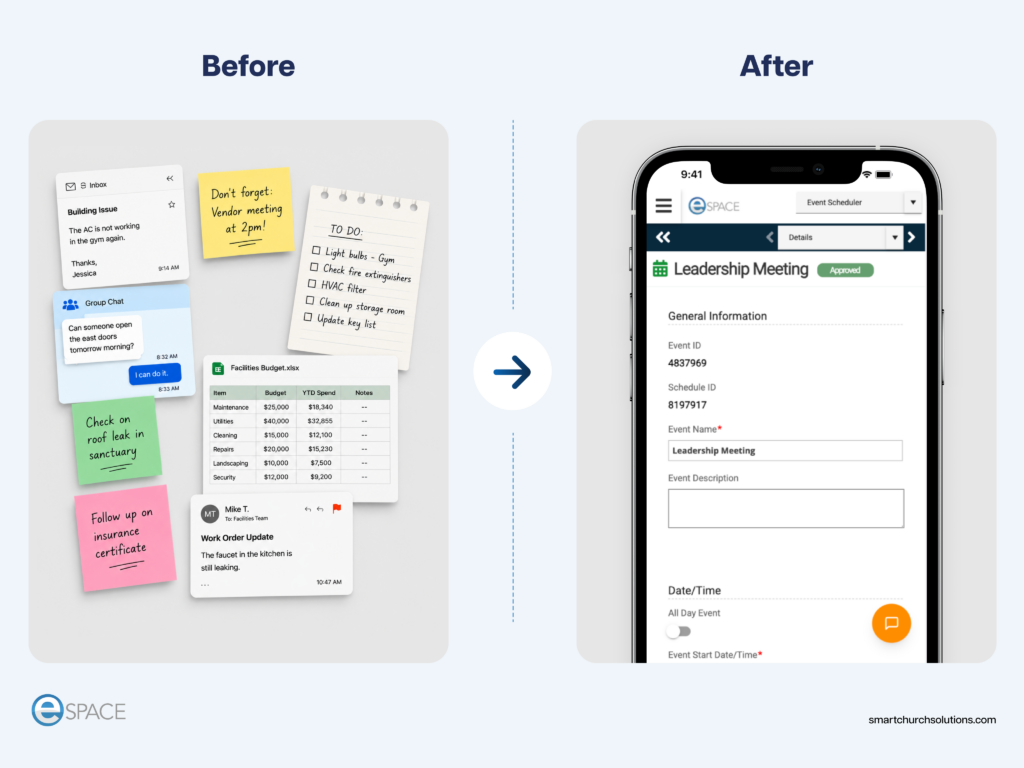
Someone texts the Facilities Director. A ministry leader sends an email. A volunteer mentions a leaking faucet after Sunday service. A sticky note gets left on someone’s desk.
The problem is not that people report issues. The problem is that there is no consistent place for those requests to live.
When requests are scattered across multiple communication channels, important work gets delayed, forgotten, or completed twice. Eventually someone asks, “Didn’t we already fix that?” Or worse, “I thought someone else was handling it.”
The Hidden Cost
Small problems become expensive problems. A leaking toilet becomes water damage. A noisy HVAC unit becomes a compressor replacement. A loose handrail becomes a liability issue. Not because the church ignored the problem, but because the problem got lost.
What Organized Churches Do Differently
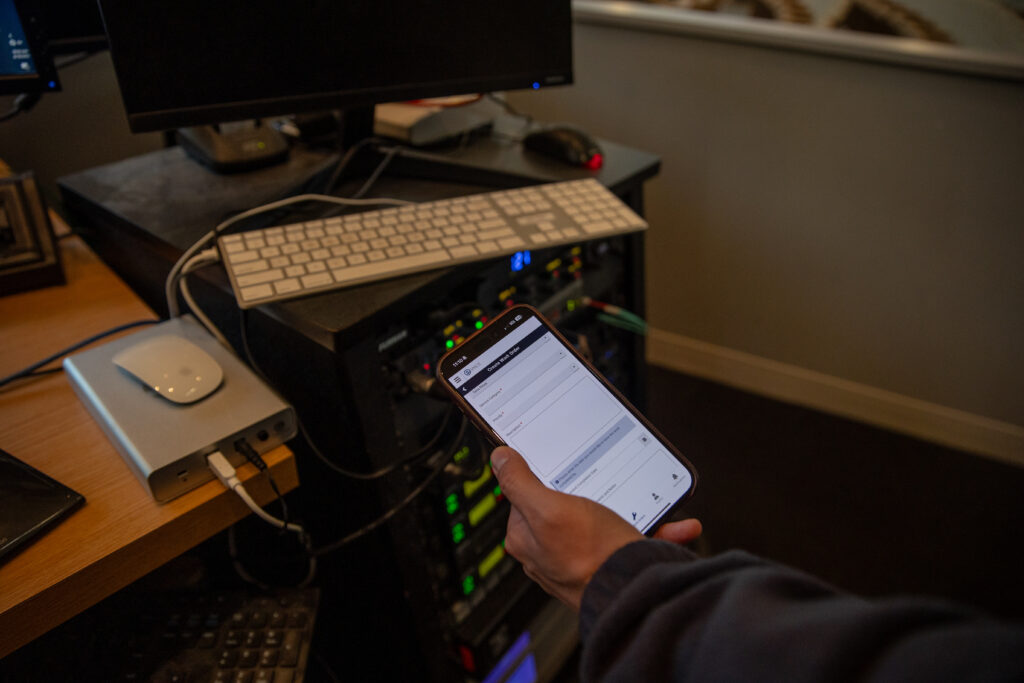
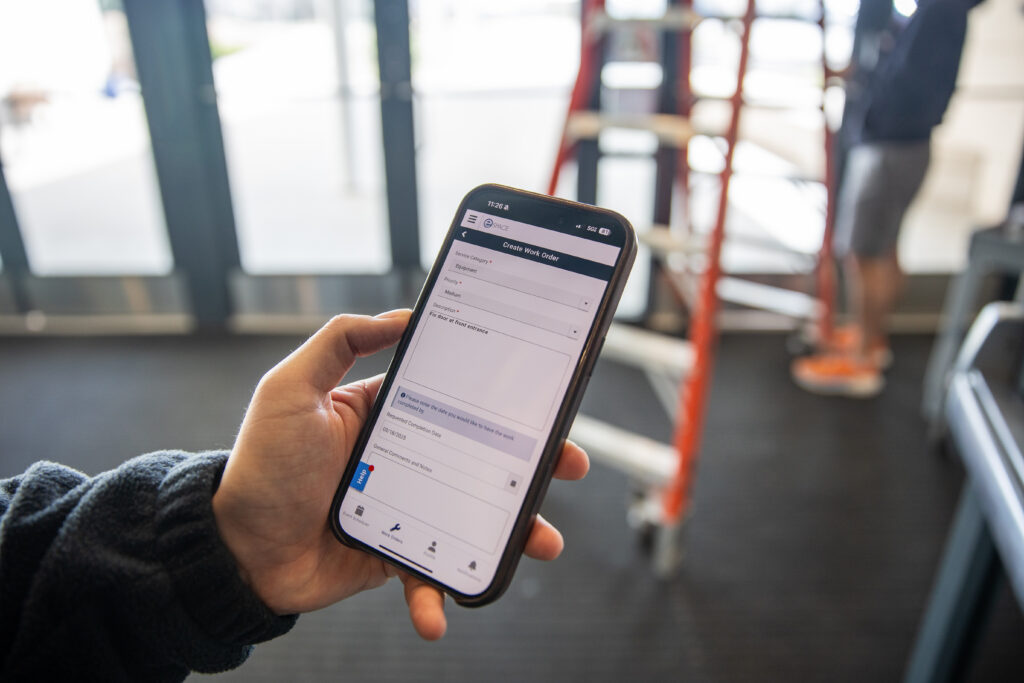
Instead of relying on memory, they give every maintenance request one home. Every request can include:
- A priority level
- An owner
- Due dates
- Notes and photos
- Status updates
- A complete history
Nothing disappears into someone’s inbox. Everyone knows exactly what is waiting to be completed. With eSPACE, every maintenance request flows into a centralized work order system, giving facility teams visibility from submission to completion.
2. Double-Booked Rooms Are a Symptom of Disconnected Systems
Few things frustrate ministry teams faster than showing up for an event only to discover another group is already using the room.
It happens because room scheduling often lives across several different systems: Google Calendar, Outlook, shared spreadsheets, paper calendars, verbal conversations, and church management systems that were not built for facility scheduling.
No single calendar tells the whole story.
The Hidden Cost
Double bookings are only the beginning. Disconnected scheduling also creates:
- Missing setup crews
- Resource shortages
- Last-minute room changes
- Confused volunteers
- Frustrated ministry leaders
- Poor experiences for guests
What Organized Churches Do Differently
Instead of simply scheduling events, they manage the entire facility. Every reservation can include:
- Rooms
- Equipment
- Tables and chairs
- Setup instructions
- Cleanup assignments
- Staff responsibilities
- Approval workflows
- Conflict detection
Everyone sees the same calendar. No guessing. No duplicate reservations. No wondering whether a room is actually available. Because eSPACE was built specifically for churches, event scheduling extends beyond placing an item on a calendar. It connects rooms, resources, workflows, and facility operations in one system.
3. Reactive Maintenance Costs Churches Thousands Every Year
Many churches do not realize they are practicing reactive maintenance.
Something breaks. Someone fixes it. Repeat.
It feels normal because that is how many churches have operated for decades. But reactive maintenance is almost always the most expensive maintenance strategy. Emergency repairs cost more. Equipment fails sooner. Budgets become unpredictable.
The Hidden Cost
Imagine replacing a rooftop HVAC unit several years earlier than necessary because basic maintenance was not consistently performed. Or replacing boilers, pumps, or lighting systems without understanding their condition or expected lifespan. These are not just maintenance issues. They are stewardship issues.
What Organized Churches Do Differently
Instead of waiting for equipment to fail, they create preventive maintenance schedules for routine inspections, filter replacements, lubrication, seasonal maintenance, and safety checks. Each asset builds a complete service history over time.
- Repair history
- Total maintenance costs
- Asset age
- Upcoming maintenance
- Expected replacement timelines
Rather than reacting to emergencies, churches begin planning years in advance. That is better for budgets and better stewardship. eSPACE combines preventive maintenance, asset history, and lifecycle planning so churches can extend equipment life and reduce costly surprises.
4. Your HVAC Should Not Heat Empty Rooms
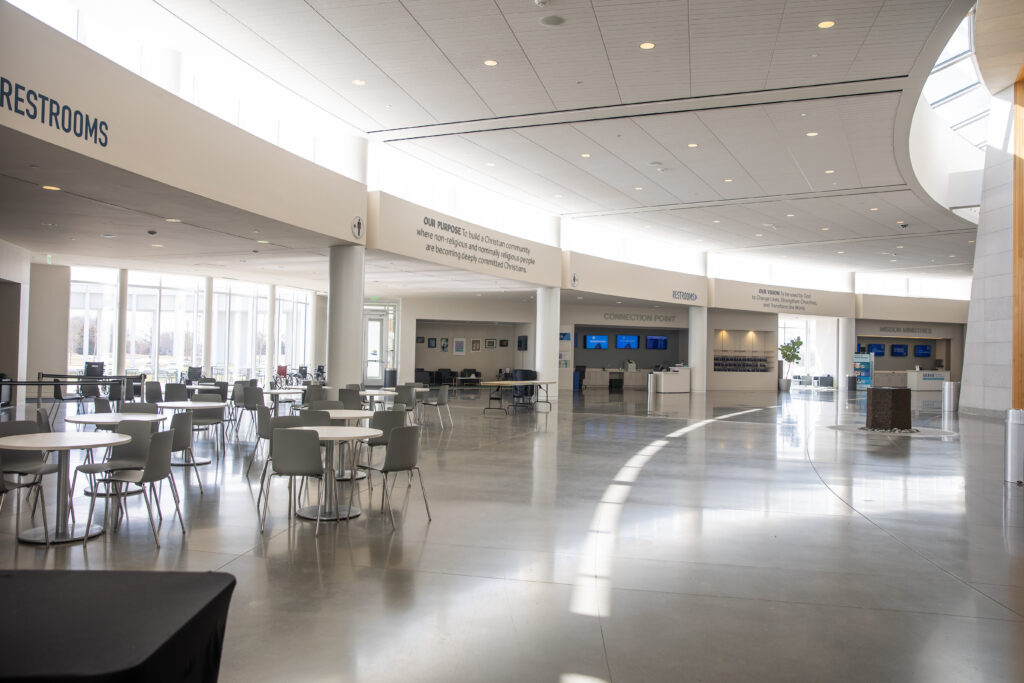
Imagine heating a 500-seat worship center all afternoon for a meeting that was canceled yesterday.
It happens more often than most churches realize. Traditional building automation systems require someone to manually update schedules. When they do not, HVAC systems continue conditioning empty buildings.
The Hidden Cost
Heating and cooling are often among a church’s largest operating expenses. Every unnecessary hour adds to utility costs. Multiply that across multiple buildings, classrooms, fellowship halls, and campuses, and the waste becomes significant.
What Organized Churches Do Differently
Instead of manually coordinating calendars and HVAC schedules, they automate the process.
- When an event is added, HVAC schedules adjust automatically.
- When an event changes, the building schedule updates.
- When an event is canceled, the system no longer heats or cools unused space.
It is one of the clearest examples of technology supporting facility stewardship. Less waste. Greater comfort. Lower utility bills. eSPACE integrations can connect facility schedules directly to building automation, helping churches reduce energy waste without adding more manual work.

5. Leaders Cannot Improve What They Cannot Measure
Executive Pastors make financial and operational decisions every week. But many are forced to make them without reliable facility data.
Questions such as the following often require someone to manually assemble spreadsheets, or nobody knows the answer:
- Which buildings require the most maintenance?
- How productive is our maintenance team?
- What equipment costs us the most?
- Which ministry spaces receive the most use?
- How many work orders remain open?
The Hidden Cost
Without data, budgets become guesses. Staff performance becomes subjective. Capital planning becomes reactive.
What Organized Churches Do Differently
They give leadership dashboards instead of disconnected spreadsheets. Modern reporting can provide:
- Open work orders
- Completion times
- Asset costs
- Preventive maintenance completion
- Facility utilization
- Team productivity
- Executive summaries
Many churches automate reports directly to leadership inboxes. That means fewer meetings spent gathering information and more time making informed decisions. Analytics and executive reporting give Executive Pastors greater visibility into facility performance, budgeting, and long-term stewardship.
6. Your Next Facilities Director Should Not Inherit Chaos
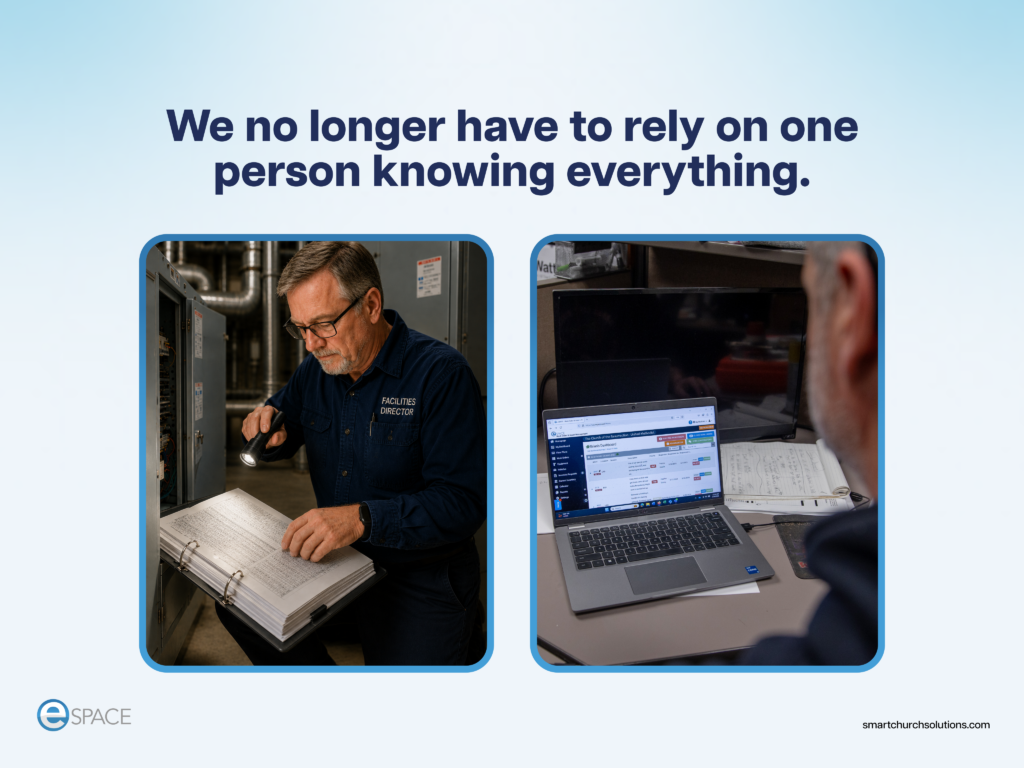
Every church has that person. The one who knows which breaker controls Fellowship Hall, which HVAC unit serves the nursery, why that door sticks every winter, and which vendor installed the fire alarm.
They are invaluable. But they are also a single point of failure.
When they retire, move away, or take another position, years of institutional knowledge often leave with them.
The Hidden Cost
The new Facilities Director starts from scratch. They spend months rediscovering information the church already paid to learn. Maintenance history disappears. Vendor contacts vanish. Procedures are forgotten.
What Organized Churches Do Differently
They document everything: every repair, inspection, asset, procedure, vendor, and note. Instead of knowledge living inside one person’s head, it becomes part of the church’s operating system.
That creates continuity for future staff and protects the ministry for decades to come. eSPACE helps churches preserve institutional knowledge by storing documentation, maintenance history, procedures, and asset records in one centralized platform.
7. Churches Deserve Software Built Specifically for Ministry
There are many capable general-purpose facility management platforms. Solutions such as FMX, Limble, and UpKeep serve organizations across manufacturing, healthcare, education, and commercial facilities.
But churches operate differently. Sunday mornings. Volunteer teams. Multiple ministries sharing the same spaces. Seasonal events. Worship rehearsals. Funerals. Vacation Bible School. Community outreach.
Faith-based organizations need software that understands those realities.
What Organized Churches Do Differently
They choose software built around ministry instead of adapting ministry around software. That means:
- Church-focused workflows
- Ministry-friendly terminology
- Event scheduling designed for worship environments
- Facility stewardship tools
- Faith-based support
- Unlimited users so staff, ministry leaders, and volunteers can participate without added per-user licensing barriers
eSPACE was built for churches and private schools, combining event scheduling, work orders, preventive maintenance, asset management, analytics, and building integrations into one platform supported by a ministry-minded team.

Is Your Church Ready to Move Beyond Spreadsheets?
Most churches do not outgrow email and spreadsheets overnight.
They outgrow them one missed work order, one scheduling conflict, one emergency repair, and one frustrated staff member at a time.
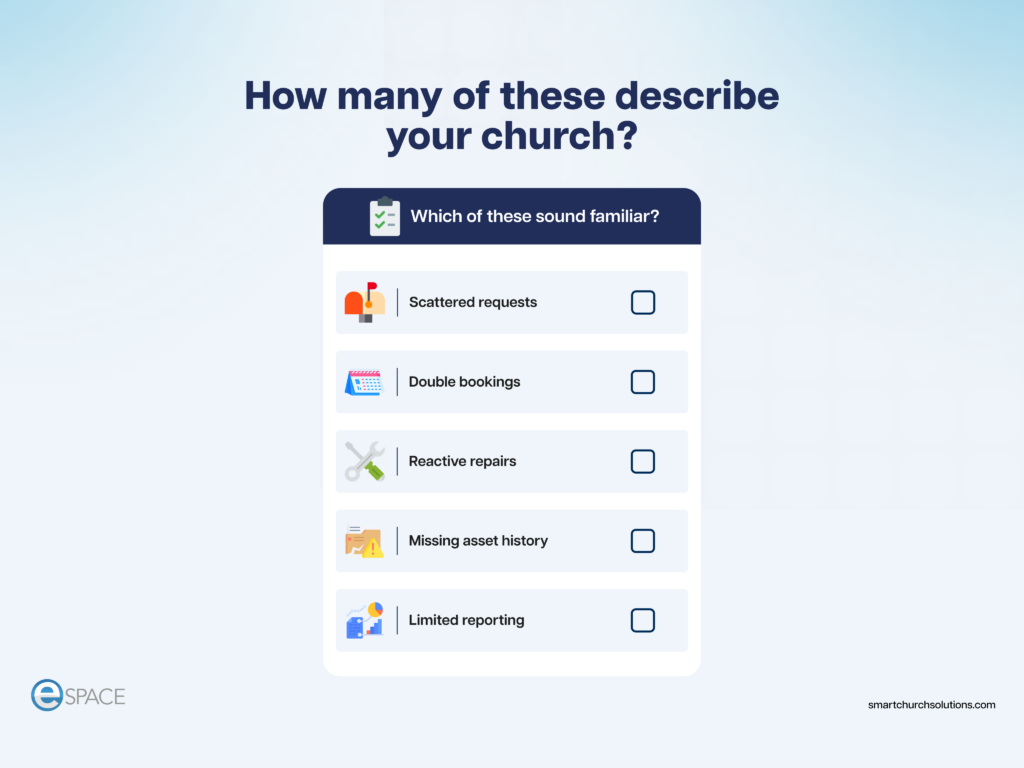
If your church is experiencing any of the challenges above, it may be time to evaluate whether your current systems are helping your ministry or holding it back.
More than 1,300 churches and private schools have already made the transition to a centralized approach that improves communication, strengthens stewardship, and gives leadership greater visibility into their facilities.
Ready to See How Your Church Compares?
Request a personalized eSPACE demo to see how your current facility processes compare with churches that have modernized their operations.
You will receive a walkthrough tailored to your church’s size, workflows, and goals so you can identify opportunities to save time, reduce costly mistakes, and steward your facilities with greater confidence.