

Walk into any corporate facility management software demo, and you’ll see a slick interface, impressive dashboards, and a feature list that seems to cover everything. For a hospital system, a commercial real estate portfolio, or a corporate campus—it probably does.
But your church isn’t a corporate office.
The way your building is used, who uses it, how your systems need to respond, and even how you define success—all of it is fundamentally different. What works in a predictable, 9-to-5 corporate environment often breaks down in a ministry context where spaces are shared, schedules are layered, and the mission drives every decision.
Trying to run a church facility on software designed for corporate operations is like putting a city bus on a dirt trail. It might move, but it was never built for that terrain.
In this article, we’ll walk through the full picture, from the day-to-day operational realities of managing a church facility to the bigger strategic and philosophical differences that shape how your tools should be built, used, and priced.
Your Building Doesn’t Operate Like a Corporate Office
Before you look at schedules, systems, or budgets, the first and most important difference is the people interacting with your facility every day.
Who’s Actually Using the System
In a corporate environment, facility management platforms are used by a defined, trained group of professionals: facilities managers, operations coordinators, and maintenance technicians. These are people who interact with the software daily, even hourly, and are comfortable navigating complex interfaces.
In a church, your user base looks completely different:
- A volunteer women’s ministry leader is scheduling a quarterly retreat.
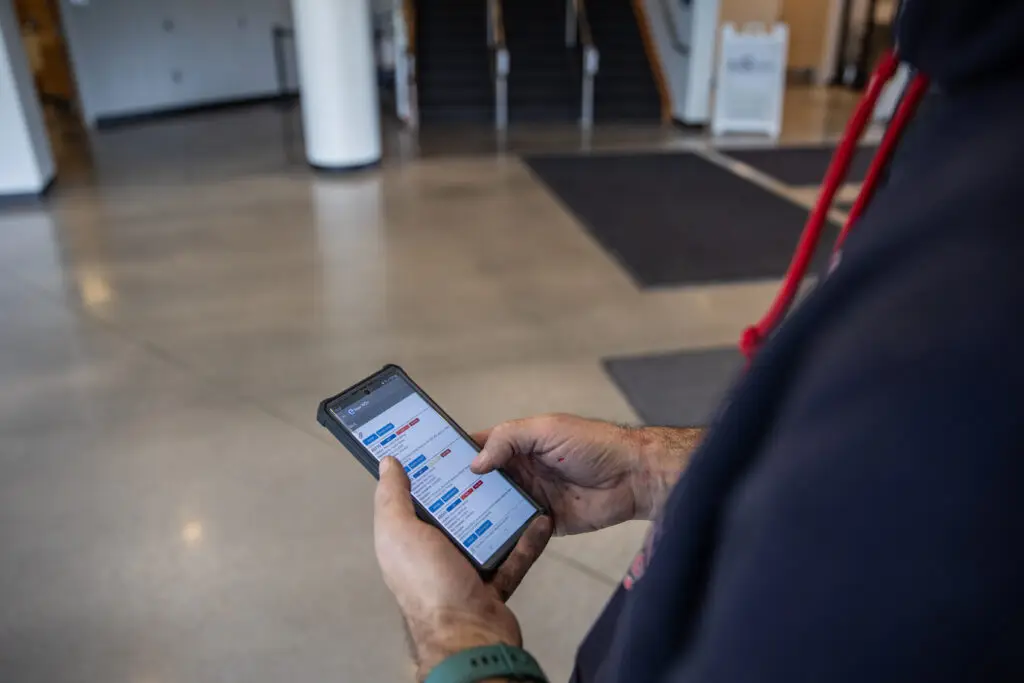
- A part-time custodian submits a work order for a broken fixture.
- A children’s director is flagging an HVAC issue in the nursery on a Sunday morning.
- An outside nonprofit is requesting fellowship hall access for a Tuesday morning program.
- A senior facilities director is overseeing a 100,000-square-foot campus with a team of one.
Your platform needs to be intuitive for all of them, not just the facilities professional. That means simple submission flows, clear approval pathways, and interfaces that don’t require a training manual to navigate. eSPACE was designed with this reality in mind from day one.

The Rhythm of Space Scheduling
Corporate scheduling is largely predictable. Conference rooms follow workweek rhythms, recurring meetings have defined patterns, and the building’s peak demand is consistent and foreseeable.
Church scheduling is anything but. A typical week might include:
- Multiple weekend services with overlapping setup, teardown, and transition windows.
- Wednesday evening programming across six different age groups in dozens of different rooms.
- A community nonprofit is renting the fellowship hall on Tuesday mornings.
- A wedding booked in the sanctuary six months out, with a rehearsal the night before.
- Seasonal spikes around Christmas and Easter that compress multiple events into a single weekend.
Generic platforms weren’t designed to handle layered approval chains, resource conflict detection, public-facing request portals for external groups, or the kind of multi-room coordination that defines a busy church weekend. Purpose-built tools are.
Maintenance, Work Orders, and the Stewardship of Church Assets
Corporate facilities have dedicated maintenance teams, vendor contracts, and capital planning budgets. Work order systems in that world are built around SLAs, cost centers, and asset depreciation schedules.
Churches face a different reality. A single facilities director may be responsible for everything from a 30-year-old boiler to the church van to a fleet of folding chairs, often with a small or part-time team and no formal maintenance background. Work orders get submitted by ministry staff who aren’t technicians. Vendors are relationships, not contracts. And deferred maintenance isn’t a line item to optimize; it’s a stewardship failure with real ministry consequences.
| When a children’s director notices water damage in the nursery ceiling on a Sunday morning, they shouldn’t need to know which cost center to charge. They should be able to submit a work order in 30 seconds and trust that the right person gets notified. |
eSPACE’s work order and preventive maintenance modules are built for this context, with simple submission flows for non-technical staff, automated recurring maintenance tasks for critical systems, and asset tracking that helps churches get ahead of costly repairs rather than react to them.
IoT Integration and the Challenge of Sporadic Facility Use
This is one of the most underappreciated differences between corporate and church facility management, and it has real financial implications.
A corporate office building operates on a reliable, predictable schedule. HVAC systems ramp up Monday morning and wind down Friday evening. Door access follows badge-in hours. Digital signage displays the same weekly agenda. Automating these systems is relatively straightforward because the schedule is consistent.
A church campus operates on a completely different pattern. Your main sanctuary might sit empty Monday through Friday, then host three services, two rehearsals, and a community event across a single weekend. Your fellowship hall is dark on Tuesday, used for a recovery program on Wednesday evening, and then hosts a 200-person banquet on Saturday. Your children’s wing needs to be climate-controlled and lit for a two-hour window on Sunday morning — not all week.
| Conditioning an empty sanctuary all week isn’t stewardship — it’s waste. Smart IoT integration means your building responds to how you actually use it, not a generic 9-to-5 assumption. |
eSPACE’s IoT integrations allow churches to connect their facility scheduling directly to building systems:
- HVAC systems that pre-condition spaces based on scheduled events and stand down when rooms go unused.
- Door access controls that unlock and lock based on event start and end times, not fixed building hours.
- Digital signage that automatically updates to display the right information for whatever event is happening in that space.
For a church that uses its building across irregular hours seven days a week, this kind of event-driven automation isn’t a luxury; it’s how you protect your energy budget, improve security, and create a consistently welcoming environment without adding staff hours to manage it manually.
Why Your Software Shouldn’t Be Built—or Priced—Like a Corporate Tool
The operational differences between corporate and faith-based facility management are significant, but they lead to something deeper.
When your building operates differently, your software can’t just look different—it has to be built differently. The way it’s structured, the way it’s adopted across your team, and even the way it’s priced all need to reflect the realities of ministry, not the assumptions of a corporate environment.
The Per-User Pricing Trap
Most corporate CMMS platforms charge by the seat. Add a new facilities technician? That’s another license. Want your ministry coordinators to submit work orders directly? More seats. Bring on volunteers to help manage facilities during a building campaign? The bill grows with every name you add.
For a corporation, that model makes sense. Headcount is controlled, budgeted, and relatively stable.
For a church, it’s a tax on growth.
Sixteen years ago, Smart Church Solutions made a deliberate decision: eSPACE would never penalize a church for growing. Growing its congregation. Growing its staff. Growing the number of people (including volunteers) stepping up to help steward the facilities entrusted to them. That conviction is still baked into our pricing model today.
| When a church adds three new ministry directors and wants all of them managing their own room requests and work orders, that should be a cause for celebration, not an invoice. |
eSPACE is priced on other criteria, not the user count. Unlimited staff, unlimited volunteers, unlimited external partners, all included. Because the goal has always been to get as many people as possible engaged in caring for the building, not to create a financial barrier that discourages adoption.
Budget Realities and the Stewardship Mindset
Corporate facility managers have dedicated budgets, capital planning cycles, and clear ROI frameworks. Their software investments are justified on cost reduction and operational efficiency metrics.
Faith-based organizations operate under a stewardship ethic. Every dollar spent on software is a dollar not spent on ministry programs, benevolence, or missions. The question isn’t just “what does this cost?” but “what does better stewardship of our facilities make possible for our mission?”
The answer, in practice, is significant. When churches reduce the administrative burden on their facilities team, fewer missed work orders, less reactive maintenance, Capital reserve funds are readily available, no more double-booked rooms, building systems that respond intelligently to actual usage—staff get hours back each week that can be redirected toward the people they serve.
| The most expensive facility management tool isn’t the one you pay for—it’s the one your staff works around. |
Mission Comes First. Always.
Corporate facility management exists to support business operations. Every decision connects back to productivity, cost, and growth.
Faith-based facility management exists to support a mission. The sanctuary isn’t just a room; it’s where lives are changed. The classrooms aren’t just square footage; they’re where the next generation learns to love God and neighbor. The fellowship hall isn’t just a rental asset; it’s a front door to the community.
When a work order goes unresolved for three weeks, and the nursery smells like mildew, it affects far more than operational metrics. When the HVAC fails on a Sunday morning or the door access system won’t unlock for a Wednesday evening program, the impact ripples into every person who walked through that door expecting to encounter something sacred.
A purpose-built platform understands this. eSPACE was designed by people who have served in ministry contexts, not retrofitted from an enterprise tool that treats your building as just an asset class.
The Full Picture: Faith-Based vs. Corporate Facility Management
In this article, here’s what we’ve covered:
| Dimension | Corporate FM | Faith-Based FM |
| Primary users | Trained facilities professionals | Diverse staff, volunteers, and community members |
| Scheduling rhythm | Predictable, workweek-aligned | Sporadic, multi-layered, event-driven |
| Work order submission | Facilities team and trained staff | Anyone—non-technical staff and volunteers included |
| IoT & building automation | Fixed schedules; 9-to-5 operating hours | Event-driven; responds to actual facility usage |
| Pricing model | Per-user licensing; costs grow with headcount | Facility-based; unlimited users always included |
| Budget framework | ROI and cost reduction | Stewardship and mission enablement |
| Ultimate purpose | Support business operations | Advance mission and serve the community |
Built for the Way You Actually Work
eSPACE was purpose-built for faith-based facilities, not retrofitted from a corporate tool. Whether you need better control over space scheduling, work order management, preventive maintenance, IoT-driven building automation, capital reserve planning, or you’re simply tired of paying more every time your team grows, we’d love to show you what a ministry-first approach looks like.