
Artificial intelligence isn’t coming for your job, but facility managers who know how to use AI effectively will outperform those who don’t. While many church leaders fear AI or don’t understand its practical applications, forward-thinking facility managers are already using tools like ChatGPT to streamline operations, save thousands of dollars, and accomplish tasks they never had time for before.
Here’s the truth: AI is a tool, just like any other in your toolbox. Used properly, it creates great things. Used improperly, it destroys. The key is understanding how to leverage AI for facility stewardship while maintaining the expertise and judgment that only human experience provides.
Why Church Facility Managers Should Embrace AI
The Time Problem
As a facility manager, you’re constantly pulled in multiple directions:
- Emergency repairs demand immediate attention
- Preventive maintenance schedules need planning
- Vendors require clear communication
- Leadership wants detailed budget justifications
- Documentation and SOPs sit unwritten for months
The AI Solution: Offload the grunt work—data compilation, research, initial drafting—to AI, freeing your time for the critical thinking and relationship management that only you can provide.
The Knowledge Gap
Even experienced facility managers face situations outside their expertise:
- Unfamiliar equipment and unreadable data plates
- Historical building systems with no documentation
- Specialized construction methods from different eras
- Industry standards for projects you’ve never tackled
The AI Solution: AI can search thousands of sources in seconds, providing context, standards, and insights that would take hours of traditional research.
10 Powerful AI Applications for Church Facility Management
1. Writing Standard Operating Procedures (SOPs)
- The Challenge: SOPs are time-consuming to write, yet essential for training and consistency.
- The AI Solution: Dictate a basic outline of what you want, and ChatGPT builds comprehensive SOPs for you.
- Effective Prompt Example: I need to create a standard operating procedure for monthly fire extinguisher inspections at our church facility. We have 24 portable fire extinguishers throughout a 50,000 sq ft building. The SOP should include: inspection checklist items, documentation requirements, what to do if issues are found, and OSHA compliance considerations. Please create a detailed SOP that a volunteer could follow.
- Why It Works: Specific context (church, 24 extinguishers, 50K sq ft, volunteer-friendly) guides AI to create relevant, actionable procedures.
- Time Saved: Hours of writing reduced to minutes of editing and refinement.
2. Building Preventive Maintenance Schedules
- The Challenge: Creating comprehensive PM schedules requires knowing what needs maintenance and when.
- The AI Solution: Dialogue with AI to build complete preventive maintenance calendars tailored to your facility.
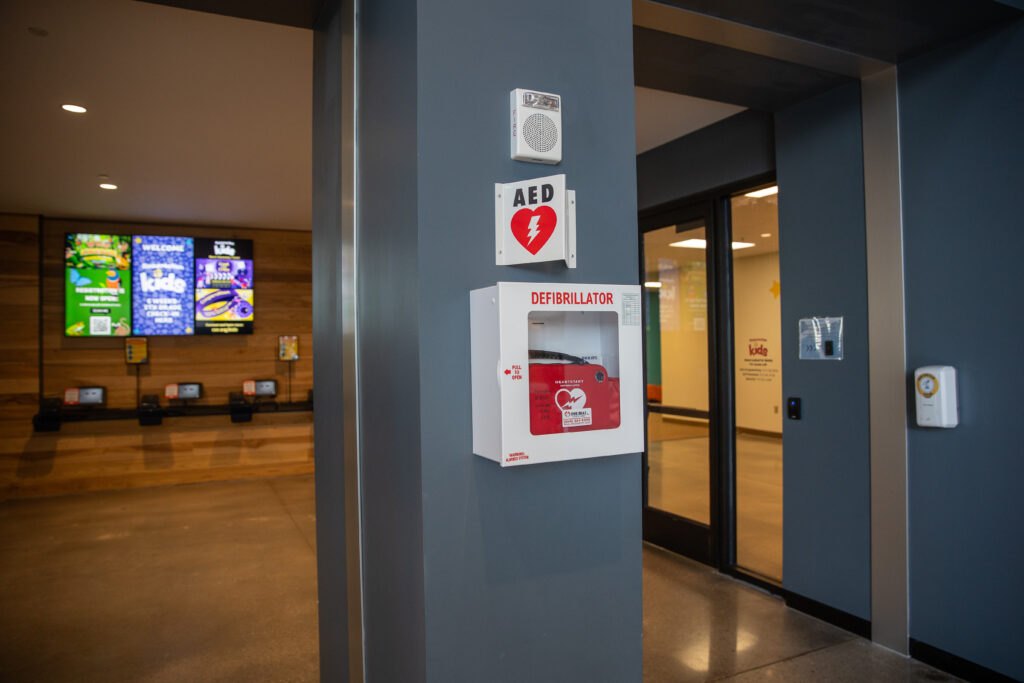
- Effective Prompt Example: I manage a 75,000 square foot church facility built in 1995 with the following systems: 6 HVAC rooftop units, commercial kitchen with hood vents, 3 boilers, emergency exit lighting (40 fixtures), fire alarm system, and landscaping irrigation. Help me build a comprehensive preventive maintenance schedule with recommended frequencies for each system based on industry best practices.
- Why It Works: Detailed facility information allows AI to recommend appropriate maintenance intervals and tasks.
- Refinement Process: AI provides an initial schedule → You adjust based on actual usage patterns → AI reformats into a calendar format
3. Work Order Prioritization
- The Challenge: Multiple tasks compete for limited time and resources. Leadership wants to know your priorities and reasoning.
- The AI Solution: Feed AI your work order backlog and criteria, and get a prioritized list with clear justifications.
- Effective Prompt Example: I have 15 open work orders and need help prioritizing. My criteria are: safety issues first, items affecting worship services second, energy efficiency third, cosmetic issues last. Here are the work orders: [List your actual work orders] Please prioritize these with explanations I can share with my executive pastor about why each is ranked where it is.
- Why It Works: Clear criteria and context enable AI to apply your values consistently and explain decisions in leadership-friendly language.
4. Vendor Scope of Work Development
- The Challenge: Unclear expectations with vendors lead to disputes, cost overruns, and unsatisfactory results.
- The AI Solution: Use AI to create crystal-clear, one-page scope-of-work documents.
- Effective Prompt Example: I need to create a scope of work for a custodial vendor to clean our church facility. The building is 40,000 sq ft including: sanctuary (seats 400), 12 classrooms, commercial kitchen, 6 restrooms, and administrative offices. Service needed: 5 days per week after 6pm. I need the scope to clearly define: areas to be cleaned, specific tasks for each area, frequency of deep cleaning tasks, quality standards, and supplies responsibility. Create a one-page scope of work document.
- Why It Works: Comprehensive details ensure nothing is left to speculation or assumption.
- Result: No more “we didn’t talk about that” conversations with vendors.
5. Safety Assessments and Hazard Identification
- The Challenge: Identifying safety hazards requires trained eyes and experience.
- The AI Solution: Upload photos, and ChatGPT identifies safety concerns you might miss.
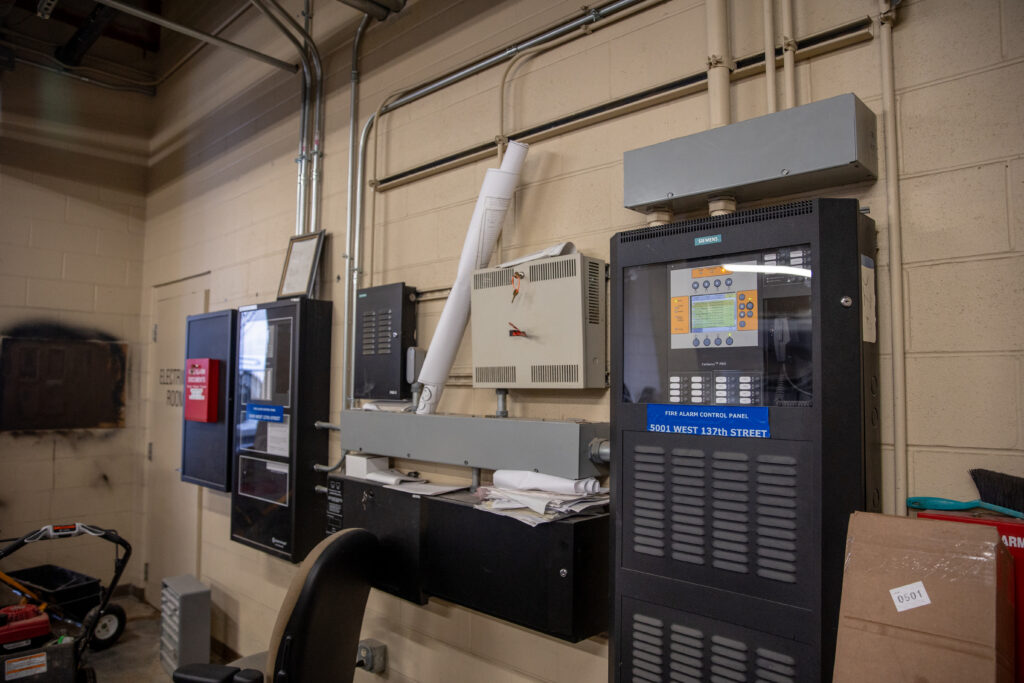
- Effective Prompt Example: I’m conducting a safety walk-through of our church facility. I’ve attached a photo of our mechanical room. Please identify any safety concerns, code violations, or hazards visible in this image. Prioritize by severity.
- Why It Works: AI’s image recognition can detect issues such as blocked exits, improper storage, missing guards, or electrical hazards.
- Application: Empower volunteers to conduct mini-assessments by having them photograph areas and upload to AI for analysis.
6. Incident Response Documentation
- The Challenge: After an emergency, you need clear documentation, but you’re dealing with stress and chaos.
- The AI Solution: Relay what happened verbally to AI, which organizes it into professional incident reports.
- Effective Prompt Example: I need to document an incident that occurred at our church today. A visitor slipped on a wet floor in the fellowship hall at approximately 2:30pm. Here’s what happened: [Describe the incident in detail – who, what, when, where, response actions taken, AED use if applicable, EMS contact, etc.] Please create a formal incident report that documents this clearly for our insurance company and leadership team.
- Why It Works: AI organizes rambling, stressed accounts into structured, professional documentation.
7. Emergency Preparedness Planning
- The Challenge: Creating comprehensive emergency plans requires expertise across multiple scenarios.
- The AI Solution: Let AI help develop scenario-specific emergency response protocols.
- Effective Prompt Example: I need to create an emergency preparedness plan for severe weather events at our church in [location]. We’re in a tornado-prone area with a building that seats 600 people across two floors totaling 85,000 sq ft. Create a comprehensive severe weather emergency plan including: early warning systems, shelter locations, communication protocols, staff responsibilities, and post-event assessment procedures.
- Why It Works: Location-specific and facility-specific context creates relevant, actionable plans.
8. Budget Development and Justification
- The Challenge: Budget season requires defending every line item with clear, unemotional justification.
- The AI Solution: Upload your analytics and work order data to create defensible budget presentations.
- Effective Prompt Example: I’m preparing the facilities budget for next year. Based on our work order analytics showing 127 HVAC-related repairs this year (costing $18,400), 43 plumbing issues ($8,200), and 89 electrical repairs ($12,600), help me develop a maintenance budget proposal that includes: historical spending analysis, projected needs for next year, preventive maintenance investment to reduce reactive repairs, and ROI justification for each category. Present this in a format I can share with our finance committee.
- Why It Works: A data-driven approach removes emotion and provides objective justification for budget requests.
- Pro Tip: Upload your eSPACE analytics exports directly to AI for comprehensive budget analysis.
9. Equipment Identification and Research
- The Challenge: You discover unfamiliar equipment with partial or missing identification.
- The AI Solution: Upload photos of the equipment, data plates, and connections for rapid identification.
- Effective Prompt Example: I found this piece of equipment in our mechanical room connected to our chiller system. The data plate is partially readable [describe visible information]. I’ve attached photos of: the main unit, the gas inlet manifold, and the pump it uses. Can you help identify what this is, its likely age, common issues with this type of equipment, and maintenance recommendations?
- Why It Works: Multiple context clues (photos, location, connected systems) help AI search image databases and technical documentation faster than manual research.
- Real Result: One facility manager used this approach to identify mystery equipment and source replacement parts in minutes instead of days.
10. Vendor Bid Analysis and Cost Verification
- The Challenge: Are you getting fair pricing? Is the scope appropriate?
- The AI Solution: Upload vendor bids for instant analysis and comparison.
- Effective Prompt Example: I received this bid for HVAC repairs on three units at our church in [city, state]. The bid totals $47,000 for [describe scope of work]. Can you analyze if this pricing is reasonable for our area? Also, I previously used [contractor name] – can you research their typical labor rates to estimate what this same work might cost through them?
- Real-World Result: One church saved over $20,000 by using AI to compare vendor pricing and identify overcharging—all in about 30 seconds of AI research versus hours of phone calls and manual research.
- Why It Works: AI can quickly access regional pricing data, labor rates, and industry standards that would require extensive manual research.
The Art of Effective AI Prompts
Quality In, Quality Out
The information AI provides is only as good as what you give it. Poor prompts produce poor results.
The Specificity Principle
Bad Prompt: “What’s this equipment?”
Good Prompt: “I’m on-site and found this piece of equipment connected to our chiller system. It hasn’t been working for years. [Attach photo] Can you identify what this is and suggest why it might have failed?”
Why the difference matters: Context and specificity guide AI toward relevant, actionable responses.
The Conversation Approach
Don’t treat AI like a search engine—treat it like a knowledgeable colleague:
- Click the microphone and speak naturally (if using ChatGPT voice feature)
- Provide background context before asking questions
- Refine and redirect based on initial responses
- Ask follow-up questions to dig deeper
Example Conversation Flow:
- You: “I’m dealing with recurring HVAC issues in our sanctuary…”
- AI: [Provides general troubleshooting]
- You: “I’ve already tried those basic solutions, and I’m not a fan of them. I’m looking for more creative approaches…”
- AI: [Provides advanced, creative solutions]
Learning to Prompt Like a Pro
If you struggle with online searches, you’ll need practice with AI prompting. Consider:
- Finding a mentor who uses AI effectively
- Practicing with low-stakes questions to build skills
- Studying effective prompts from others in your field
- Treating it like learning card catalog skills—knowing where to look helps you find better answers
Critical Limitations: What AI Cannot Do
AI Will Never Replace You
ChatGPT and other AI tools are assistants, not replacements. They lack:
- Institutional knowledge of your specific facility
- Cultural understanding of your church community
- Relationship skills essential to facility management
- Judgment calls based on experience and context
- Physical presence to actually do the work
You Must Remain the Subject Matter Expert
Always double-check AI output because:
- It sometimes provides incorrect information confidently
- It may misunderstand specialized equipment or systems
- It doesn’t know your facility’s unique quirks
- It can generate wrong serial numbers or specifications
- You are responsible for the final decisions
The Tool vs. Master Distinction
- AI as Tool: You guide it, verify its work, and apply its research to your specific context.
- AI as Master: You blindly accept everything it says without verification
- Remember: If AI could fully automate church facility management, churches wouldn’t need facility managers. But you can’t automate people, relationships, or the unique culture of your ministry.
Best Practices for AI Use in Facility Stewardship
1. Provide Maximum Context
Include in your prompts:
- Facility size and type
- Equipment age and specifications
- Location (for regional considerations)
- Your role and constraints
- Specific outcomes needed
2. Use AI for Grunt Work, Not Final Decisions
AI excels at:
- Data compilation and organization
- Initial draft creation
- Research and information gathering
- Formatting and presentation
You excel at:
- Verifying accuracy
- Applying judgment
- Understanding cultural fit
- Making final decisions
- Relationship management
3. Edit Rather Than Create
It’s often faster to edit a longer AI-generated document than to write from scratch. Use AI to:
- Create first drafts that you refine
- Generate comprehensive lists you customize
- Develop frameworks you adapt
4. Continuously Learn and Grow
Don’t use AI as an excuse to stop learning. You need subject matter expertise to:
- Recognize when AI gives wrong answers
- Ask better questions
- Verify information accuracy
- Adapt AI suggestions to your context
5. Maintain Privacy and Security
Be cautious about:
- Uploading sensitive financial information
- Sharing personnel details
- Including proprietary vendor contracts
- Revealing security system specifics
Safe to share:
- General facility information
- Equipment types and specifications
- Industry standard questions
- Anonymized scenarios
Getting Started: Your AI Implementation Plan
Week 1: Exploration
- Create a ChatGPT account (free version is fine to start)
- Practice with low-stakes prompts
- Try the voice conversation feature
- Get comfortable with the interface
Week 2: Simple Applications
- Write one SOP using AI assistance
- Create a PM checklist for one system
- Draft a vendor scope of work
- Document one incident or work order
Week 3: Advanced Uses
- Upload work order analytics for budget planning
- Use image analysis for safety walk-through
- Research unfamiliar equipment
- Analyze a vendor bid
Week 4: Integration
- Make AI part of your regular workflow
- Train team members on effective prompts
- Create a library of successful prompts for common tasks
- Evaluate time savings and quality improvements
Real-World Success Stories
The $20,000 Savings
A church facility manager uploaded a $47,000 HVAC repair bid to ChatGPT, which analyzed pricing in the region and compared it to typical rates from alternative contractors. The analysis revealed the bid was significantly high. The result: Over $20,000 saved in 30 seconds of AI research.
The Mystery Equipment Solution
A facility manager discovered unidentified equipment with a partially readable data plate. By uploading photos of the unit, connections, and manifold, AI identified the equipment, its age, common issues, and maintenance needs—solving in minutes what could have taken days of manual research.
The SOP Revolution
Facility managers who once avoided writing SOPs because they took hours now create comprehensive procedures in minutes, leading to better-trained teams and more consistent operations.
The Future of AI in Facility Management
Current State
AI is a powerful research and documentation assistant that saves time on routine tasks.
Near Future (1-3 Years)
- Deeper integration with facility management software
- Predictive maintenance based on pattern recognition
- Automated vendor bid analysis
- Real-time safety hazard detection via building cameras
Your Role Evolves, Not Disappears
As AI handles more grunt work, facility managers become:
- Strategic planners, rather than just task completers
- Relationship managers bridging technology and people
- Expert validators of AI-generated insights
- Culture keepers ensuring technology serves ministry
Conclusion: Make AI Your Assistant, Not Your Master
The facility managers who thrive in the coming years won’t be those who resist AI—they’ll be those who learn to use it as a powerful tool while maintaining the expertise, judgment, and relationships that only humans provide.
AI can’t replace your knowledge of your building’s quirks, your relationships with vendors, your understanding of your church’s culture, or your judgment about priorities. But it can handle the research, documentation, and compilation tasks that currently steal time from those higher-value activities.
Start small. Pick one application from this guide and try it this week. Experience the time savings firsthand. Then gradually expand your use of AI tools to tackle more of the tasks that have been languishing on your to-do list.
Remember: AI is giving you back time. Use that time to become better at the things only you can do—the strategic thinking, relationship building, and ministry support that make you invaluable to your church.
The question isn’t whether to use AI in facility stewardship. The question is: how will you use it to become more effective?
Quick Reference: Top 10 AI Prompt Templates for Facility Managers
- SOP Creation: “Create a standard operating procedure for [task] at our [facility type]. Include [specific requirements]. Make it suitable for [audience type].”
- PM Schedule: “Build a preventive maintenance schedule for [facility description with systems]. Recommend frequencies based on industry best practices.”
- Work Order Priority: “Prioritize these work orders using criteria: [list criteria]. Provide explanations suitable for [leadership type].”
- Vendor Scope: “Create a scope of work for [service type] at [facility description]. Define: areas, tasks, frequency, quality standards, and responsibilities.”
- Safety Assessment: “Analyze this photo from [location]. Identify safety concerns, code violations, or hazards. Prioritize by severity.”
- Incident Documentation: “Create a formal incident report from this description: [incident details]. Format for [intended audience].”
- Emergency Planning: “Develop an emergency plan for [scenario] at our [facility description in location]. Include [specific elements needed].”
- Budget Justification: “Based on [data/analytics], create a budget proposal for [category]. Include historical analysis, projections, and ROI justification.”
- Equipment Research: “Identify this equipment [describe/attach photos]. Provide: type, age estimate, common issues, and maintenance recommendations.”
- Bid Analysis: “Analyze this bid for [work description] in [location]. Is pricing reasonable? Compare to [alternative contractor] rates if available.”