
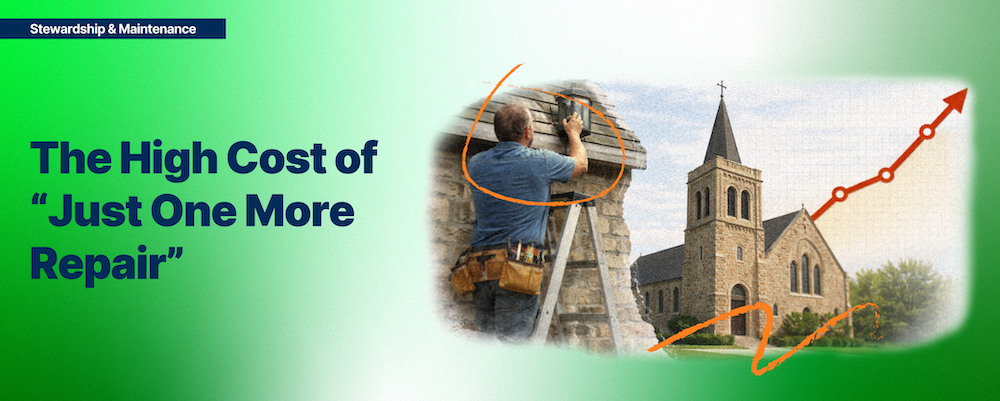
If you spend any time managing church facilities, you’ve heard it before: “Let’s just repair it one more time.”
It sounds responsible. Budgets are tight. Stewardship matters. And if a repair can buy a little more time, it feels like the wise choice. But over time, that decision—repeated again and again—creates a costly pattern.
A system breaks down. It gets repaired. A few months later, it fails again. Another repair. Then another. This cycle is especially common with HVAC systems, and it rarely ends the way anyone hopes.
Eventually, the church replaces the unit anyway—only to realize they’ve already spent thousands trying to avoid that very decision. And by then, the real cost isn’t just financial. It’s measured in frustration, discomfort, and inefficiency.
The Repair Cycle Churches Fall Into
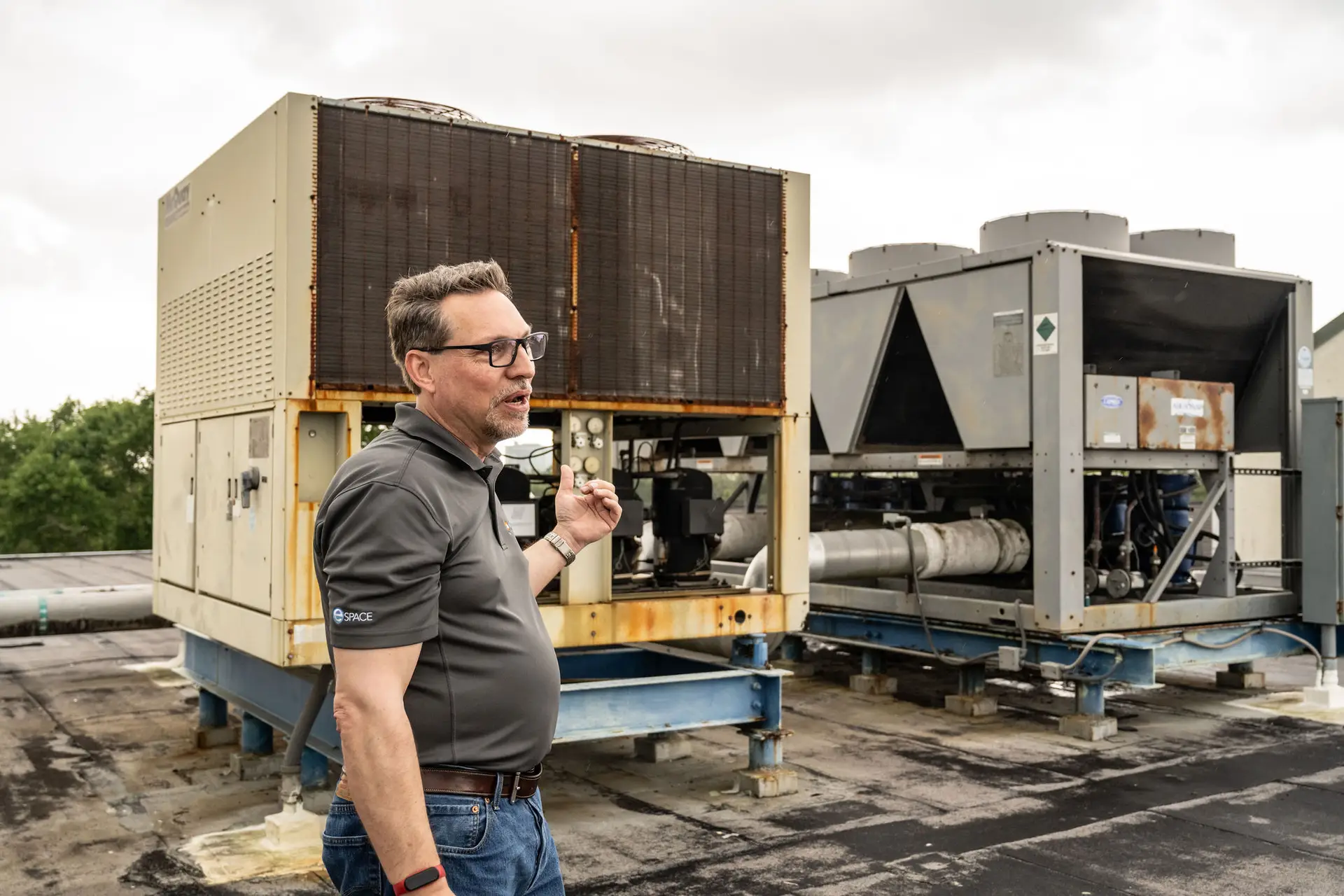
Imagine a 2,500-square-foot children’s ministry space served by a 7.5-ton rooftop HVAC unit. The system is 18–20 years old—already beyond its typical 15-year life expectancy—and beginning to show clear signs of wear.
At first, it’s a simple repair.
Then another.
Before long, the church is caught in a cycle that plays out over the next one to three years:
- Compressor repair: $3,200
- Refrigerant leak detection and recharge: $1,800
- Fan motor replacement: $2,400
- Control board failure: $1,500
- Coil repair after another refrigerant leak: $2,900
By this point, nearly $12,000 has been spent just trying to keep the unit running. Then it happens again—the compressor fails.
Another $3,000–$4,000 repair is on the table. And this time, the contractor says what everyone already suspects: the unit has reached the end of its life.
Replacing a 7.5-ton rooftop unit can easily cost $35,000 or more, depending on site conditions and installation requirements.
And this is when the reality sets in: The church didn’t avoid the cost of replacement. They delayed it and paid significantly more in the process.
The Hidden Costs No One Calculates
So what else did the delay actually cost?
The financial impact is only part of the story.
- Facility Aggravation: Facility teams are forced to manage the same issue over and over again, while occupants continue reporting the same comfort problems. The result is ongoing frustration on both sides.
- Uncomfortable Occupants: Aging HVAC systems struggle to maintain consistent temperatures, especially as failures become more frequent.
- Downtime at the Worst Moments: Breakdowns rarely happen at convenient times. They tend to occur during weekends, major events, or extreme weather—when the building is needed most.
- Wasteful Spending and Inefficiency: What may feel like smaller repairs quietly add up over time, draining resources without solving the root issue. Meanwhile, older systems consume more energy while delivering worse performance.
Why This Happens So Often
In most cases, this pattern isn’t the result of poor leadership. It’s the result of a lack of capital planning. Every major building component has a predictable life cycle. These aren’t unexpected failures; they’re known, measurable timelines:
- HVAC systems: 15–20 years
- Roofs: 15–20 years
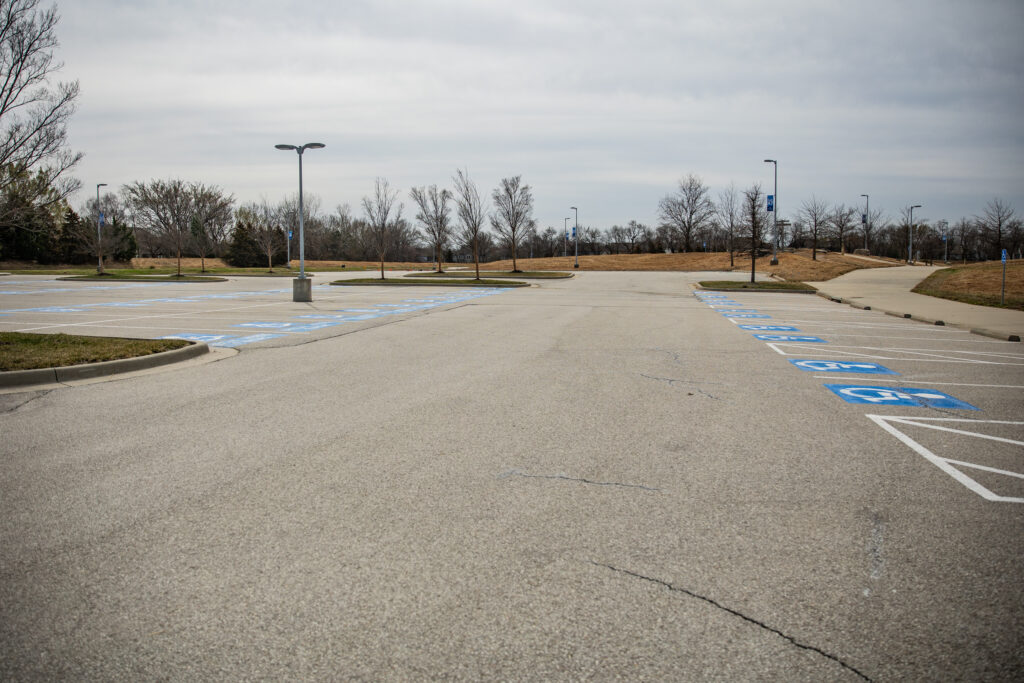
- Parking lots: 20–25 years
- Water heaters: 7–10 years
None of these replacements should come as a surprise. They are inevitable. Yet, many churches operate without a capital reserve strategy designed to prepare for them. Instead of planning ahead, they are forced to react, often defaulting to “just one more repair” in the absence of a better option.
Stewardship Means Planning For The Inevitable
Facility stewardship is not simply about fixing what breaks. It’s about anticipating what will break next and planning for it in advance.
Healthy organizations take a proactive approach. They step back and ask key questions:
- What components will reach end-of-life in the next 5–10 years?
- What will those replacements cost?
- How much should we be setting aside each year to prepare?
Instead of reacting to failures, they plan for them—making replacement decisions strategically rather than under pressure.
How A System Of Record Changes The Conversation
Without a system of record, leadership often lacks the information needed to make confident decisions.
Simple but critical questions become difficult to answer:
- How old is this HVAC unit?
- How much have we spent repairing it?
- When should it realistically be replaced?
- What other systems are nearing end-of-life?
When every asset is tracked—along with maintenance history, repair costs, and expected life cycles—leadership gains clarity and visibility.
With that visibility, the conversation begins to change. Instead of asking, “Can we repair it one more time?” They can confidently say, “Replacement is the wiser stewardship decision.”
A Better Way Forward
Church facilities represent tens of millions of dollars in entrusted assets. They deserve more than reactive repairs. They deserve thoughtful stewardship.
That means tracking asset life cycles, funding capital reserves, evaluating repair versus replacement strategically, and using systems that provide visibility and accountability. This is where a system like eSPACE can partner with your church to stay ahead of these issues.
When churches take this approach, they stop saying “just one more repair.”
They begin saying: “Let’s steward this wisely.”